Since October 2022, the QR Invoice has been the only recognised payment standard in Switzerland. It permanently replaced the red and orange payment slips that had been around for decades. If you're a freelancer, tradesperson, or SME owner in Switzerland, there's no avoiding it.
The good news: once understood, the QR Invoice makes life easier for everyone — including you. Here's everything you need to know.
What is the Swiss QR Invoice?
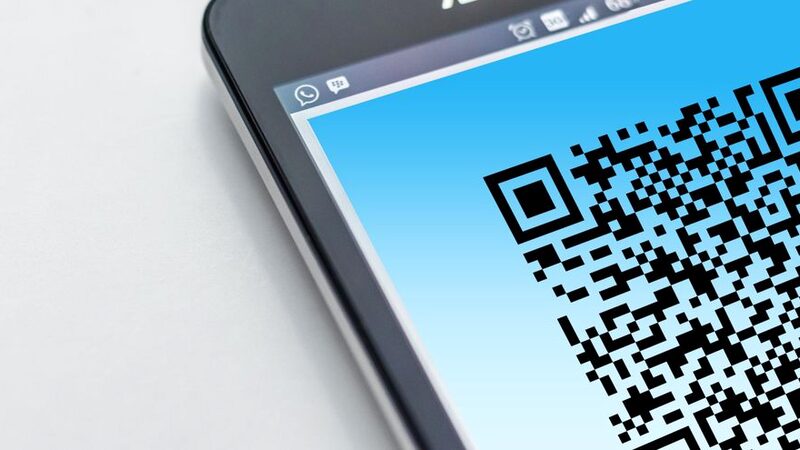
The Swiss QR Invoice (QR-Rechnung in German, QR-facture in French) is an invoicing format standardised by SIX Group under the international norm ISO 20022. It's characterised by a square QR code in the bottom-left corner, which encodes all payment information: your IBAN (or QR-IBAN), the amount, the payment reference, and the recipient's details.
In practice: your client receives your invoice as a PDF or on paper. They open their e-banking app (PostFinance, UBS, Raiffeisen, Cantonal Bank, etc.), scan the QR code, and the transfer is pre-filled. No more IBAN typos, no wrong amounts.
Since January 2023, Swiss banks no longer process the old payment slips. The QR Invoice is de facto mandatory for anyone invoicing in Switzerland.
QR-IBAN vs Standard IBAN: What's the difference?
Two variants of QR Invoice exist depending on your account type:
With a QR-IBAN: your bank assigns you a specific QR-IBAN. This allows you to include a structured payment reference (QR reference, 27 digits), which makes automatic reconciliation of payments in your accounting much easier. Ideal if you send many invoices.
With a standard IBAN: you use your normal IBAN. The QR Invoice is valid, but without a structured reference. You'll need to match payments manually in your bank statement.
To get a QR-IBAN, contact your bank or PostFinance. Most Swiss business accounts now include it by default.
Mandatory fields on a Swiss QR Invoice
A valid QR Invoice must contain all the legal requirements of a Swiss invoice (CO art. 957 ss) plus the technical elements of the SIX standard:
- Creditor information: company name or first name/surname, full address, QR-IBAN or CH IBAN
- Debtor information: your client's name and address
- Amount and currency: mandatory in CHF (or EUR)
- Issue date and invoice number (recommended: sequential, e.g. INV-2026-0001)
- Description of services: detailed enough to justify the amount
- VAT: if VAT-registered, state your VAT number (CHE-xxx.xxx.xxx MWST/TVA), rate and amount
- Payment term: 30 days is the Swiss standard per CO, but you can set a different deadline
Pli automatically checks all required fields are present before generating your invoice.
Creating a QR Invoice with Pli
With Pli, creating a compliant QR Invoice takes less than 2 minutes:
- Set up your profile once: company name, address, IBAN (or QR-IBAN), logo
- Select or create a client from your Pli address book
- Add your service lines: description, quantity, unit price
- Check VAT: the app calculates it automatically based on your settings
- Send by email or share the PDF — the QR code is generated automatically
Your client receives a PDF compliant with ISO 20022, scannable from any Swiss e-banking platform.
Why the QR Invoice speeds up your payments
With the old payment slips, your client had to manually retype your IBAN, the amount, and the reference number. Every typo led to a rejection or delay. With the QR Invoice, everything is encoded: your client scans in 3 seconds from their e-banking, and the transfer is ready.
Result: fewer reminders, faster payments, and better traceability in your accounting.
The QR Invoice is now unavoidable in Switzerland. Used correctly, it reduces payment errors, speeds up your collections, and simplifies your accounting. With Pli, you don't need to worry about technical compliance — the app handles it for you.